
Betrayal Trauma Therapy
Healing After Betrayal Is Possible.
When Trust Is Broken
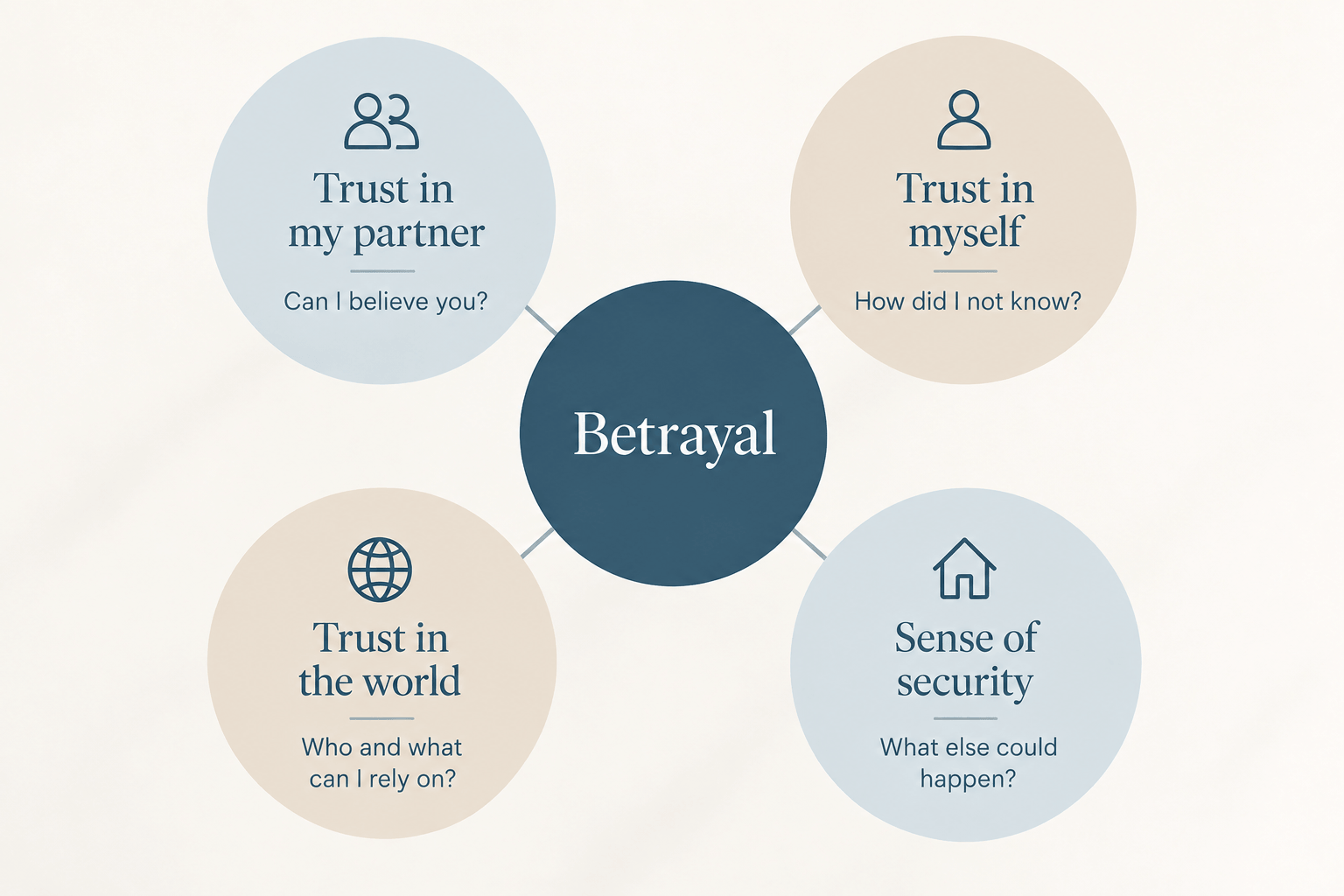
Discovering betrayal can make you doubt everything. Was any of our life real? What else don’t I know? How did I not see it? How could they do this?
You feel like you need answers. You might find yourself investigating, trying to control what happens, or thinking about it over and over. You may feel angry, afraid, nervous, sad, or numb.
Betrayal trauma can happen when someone you deeply care about breaks the trust and sense of security you depended on. Infidelity, hidden pornography use, secret gambling, repeated lying, and other forms of deception can create this kind of injury.
The betrayal can change not only how you see your partner, but also how much you trust yourself and the world around you. Nothing feels certain anymore, and you can feel completely lost.
That’s why it matters to have the right guidance as you work through it.

Finding What Is Yours to Control
After betrayal, it makes sense to want certainty. You may want to know where your partner is, what they’re doing, what they’re thinking, and whether they’re telling you the truth. But no amount of checking can give you a complete sense of safety.
Healing means learning to separate what is yours from what isn’t.
Learning that difference doesn’t mean giving up or pretending you don’t care. It means building enough trust in yourself to know that whatever someone else chooses, you can take care of yourself and respond to what is actually happening.
A Place to Tell Your Story
The therapy room is your place to tell your story. There’s no need to filter your thoughts and feelings or defend your partner. We understand how complicated these feelings can be. Being angry and still loving your partner makes sense to us.
Therapy can help you explore your story without judgment. You can begin to see what really hurts and what old wounds the betrayal may have brought back to the surface. When certain memories, images, or nightmares continue to feel present, EMDR and ART can help you process them.
As you understand your story more clearly, you can begin to understand yourself differently too. You can recognize the vulnerable feelings underneath the anger and need for control. You can learn what belongs to you and set boundaries around what doesn’t. Over time, you can become more confident in how you respond.
Healing from betrayal can be difficult, but it can help you feel more grounded in who you are while staying connected to the people you love.

Find Your Way Forward
Belong to Yourself. Love Deeply.

Trust Yourself
Feel more confident in what you see, feel, and know
Know What Is Yours
Separate your feelings and responsibilities from someone else’s
Set Meaningful Boundaries
Know what you need and how you want to respond
Feel Without Losing Yourself
Make room for difficult emotions without letting them take over.
Express What You Need
Put the deeper feelings underneath anger and fear into words.
Connect More Deeply
Find Your Betrayal Trauma Therapist



Frequently Asked Questions
What is betrayal trauma?
Betrayal trauma can happen when someone you deeply care about breaks the trust and sense of security you depended on. Infidelity, hidden pornography use, secret gambling, repeated lying, and other forms of deception can create this kind of injury.
Betrayal can affect how you see your partner, but it can also change how much you trust yourself and the world around you.
Can betrayal trauma happen after pornography use or other forms of secrecy?
Yes. Betrayal trauma isn’t limited to physical affairs. Hidden pornography use, online relationships, financial secrecy, repeated lying, or other significant breaches of trust can create a similar injury.
What matters is not simply the behavior itself, but the secrecy, deception, and broken agreements surrounding it.
Can I heal if my partner is still struggling to rebuild trust?
Your partner’s actions matter. If lying, secrecy, or betrayal is continuing, feeling uneasy may be a response to something that still isn’t secure.
You can still work on your own healing, boundaries, and self-trust. When your partner is willing to be honest, accountable, and responsive to your pain, that can also become an important part of healing.
How do I know if I’m experiencing betrayal trauma?
You may find yourself thinking about what happened over and over, searching for answers, checking for more information, or questioning what was real. You might feel angry, afraid, sad, numb, or constantly on alert.
There isn’t one correct way to respond to betrayal. Therapy can help you understand what is happening and what you need as you work through it.
Do I need to leave my relationship to heal from betrayal trauma?
No. Betrayal trauma therapy is not about convincing you to stay or telling you to leave.
Therapy can help you understand what belongs to you, clarify your boundaries, and make decisions based on what is actually happening in your relationship. Your relationship matters, and so does your ability to care for yourself within it.
How can EMDR or ART help with betrayal trauma?
Some parts of betrayal can continue to feel very present even after you understand what happened. Certain memories, images, discoveries, or nightmares may continue to bring up intense emotional or physical reactions.
EMDR and ART can be used to help process these experiences so they no longer feel as immediate or overwhelming. They are tools we may use as part of therapy depending on what you need.
Questions? We’d love to hear from you!
You can submit the contact form with any questions or concerns. Let us help you find the care you need!